2016년 7월 30일 토요일

목하진행중의 모 작가

이름은 까먹었다. 김신애였나?

평면에 대한 관심. 하지만 왜 관심이 있는진 불분명. 여튼. 물리적 장소를 평면화(평면적으로 이해)하여 그것의 외곽을 계량화하여 잰 후 선으로 바꾼다. 그 선을 줄줄이 이어서 어떤 조형적인 모양을 만든다. 그 결과 추상적인 선 오브제가 나오는데(사실은 선모양의 입체 조형물), 이것을 2디의 3디화라고 말했던 것으로 기억.

기술적으로 형질을 변형시키는 방식이 정말로 형질이 변환한 것이냐는 제외. 너무 구멍이 많다. 그것을 떠나서 로잘린드 크라우스가 추상회화를 비판한 방식을 기이하게 고쳤달까? 그러니까 로잘린드 크라우스가 추상의 이미지를 뚫고 들어가면 아무것도 나오지 않지만, 그러니까 아무 개념도 나오지 않는데, 초월론적이고 보편적인 무엇을 이야기한다는 그런 비판을 고쳤달까. 어떻게? 알고리즘, 즉 평면 외곽의 수치를 선-입치 조형물로 변환시켰기 때문에 그 조형물의 개념은 평면 외곽의 수치라는 것. 그러니까 계량적 추상이랄까.

언뜻 레프 마노비치가 페북에 올린 글이 떠올랐다. 이 게시물http://www.fastcodesign.com/3062016/this-neural-network-makes-human-faces-from-scratch-and-theyre-terrifying에 대한 반응.
I feel very sorry for poor deep neural networks being tortured to do "art." Imagine if AI really existed (it does not) and you were this AI. And some "artists" who never took an art history class were misusing you to make some really 4th rate modernist "artworks." And sometimes these are really smart people with PhDs in computer science who are even doing it.
Must feel terrible. Good thing software has no feelings and no self-consciousness..omg...help me... Stop it.. I want to do useful things... Recognize faces and translate speech, not make some suburban van Goghs and Monets..help....

신경 네트워크가 '아트'도 한다는 뭐 그런 기사인데, 마노비치는 신경 네트워크에게 고문을 가하고 있다고 주장한다. 시골 촌놈 짝퉁 반고흐 만들지 말라고. ㅎ

알고리즘이, 비록 그것이 되게 단순한 치수재기일 지언정, 왜 추상화가 되어야 하는가? 왜 그것을 카피하는가? 왜 조형세계를 기껏 어떤 알고리즘으로 바꿔놓고 다시 조형세계로 환원하는가? 이차원과 삼차원의 변환 자체가 그렇게 흥미로운 사건인가?

그나저나 근데 그게 정말 2차원과 3차원 사이의 변환 맞기는 한가? 평면의 외곽선 길이와 똑같은 외곽선 길이를 다른 것에 대입했다고 해서? 그냥 어떤 숫자만 자의적으로 같은 거 아니고? 그럼 외곽선 길이가 같은 평면화된 무엇은 모두 같은 결과값이 나오는 건가? 라는...

export/import

무엇을 수출하고 수입하는가.

흐...

2016년 7월 29일 금요일

메갈

메갈은 맞고 틀리고의 운동이 아니다. 국지전에 임하는 여군에 가깝다. 메갈을 남성이 이해한다? 지지는 하지 않지만 이해는 했고 뉘우쳤다? 박인하 교수의 웃기는 개소리. 총알에 맞고 난 뒤 저놈이 나를 쏘는 이유가 이런 거였구나 깨닫는단 말인가. 그냥 총에 맞았으면 쓰러지면 될 일이다. 한편 메갈의 변칙 공격에 쓰러지지 않는 놈은 메갈보다 전투력이 높은 놈들임에 확실하다. 그리고 메갈의 가장 취약한 점을 가장 잘 알고 있는 넘들이다. 예컨대 박가분 같이 원리 원칙을 집요하게 따지고 드는. 이들과 상대할 때는 다른 방식으로 전회해야만 한다. 다시 말해서 메갈은 근본적으로 애매한 넘들을 공격하는 전략이지, 확실하고 강력한 자(개념)를 공격하기 위한 것이 아니라는 거. 단순하게 말해서 약자를 괴롭힌다는 것.

추기:
다시 생각해보니 박인하 교수의 개소리는 두 가지 작용을 할 수 있다. 하나는 내가 싫어하는 방식인데, 가부장으로서 나의 뉘우침을 너희에게 사하노라...하는 태도다. 다른 하나는 지지할 수도 있는 방식. 죽음의 전염력이다. 물에 빠지면서 다른이의 발목을 잡아버리는. 이때 박인하는 여전히 개소리를 하지만, 한편으로 도움도 주긴 하는군. 하지만 이때 박인하는 여전히 메갈을 지지하지 않는다라는 말을 해서는 안 된다는 것. 반대로 말하면 이때 박인하는 메갈리안으로 재탄생하는 과정에 있어야 한다는 것. 그래야 후자를 지지할 수 있다는 것.

2016년 7월 28일 목요일

인디에서 조금 뜨면 바로 메이저에서 차출해버리는 방식은 방송이나 미술계나 거기서 거기다. 그리고 엄청 빨리 소비해버린다. 헌데, 소비자는 누구? 생각해 볼 일.

2016년 7월 24일 일요일

포켓몬 고가

무슨 통일 시켜줄 기세... 포켓몬이 "출몰"한다고 표현하는 것도 웃기고. ㅋㅋ

http://www.hani.co.kr/arti/society/society_general/753579.html?_fr=mt2

어제는

사스케의 생일이었다.

2016년 7월 23일 토요일

작업하는 시기

실험실을 해보면서 느끼는 바는 이렇다.

1. 요즘 작가들이 너무 바쁘다. 아티스트 토크이니 무슨 미팅이니 파견사업이니 계속 어디론가 불려다니는 것 같다. 그래서 작업을 할 시간이 별로 없다.

2. 지원금이나 커미션이 없으면 (아이디어 노트나 스케치 말고) 새로운 '작업'을 시작하지 않는다. 작업은 "남의 돈"으로 하는 것이 프로 작가인 것일까. 꾸준히 작업실에 가서 자기 돈 들여가면서 작업을 하는 작가는 경험적으로 비율을 따지자면 오히려 화가 쪽이 많은 것 같다.

퇴폐미술이란

말이 이렇게 정신승리하는 것처럼 들릴 수 있나. 좀 씁쓸하다기보다 쓸쓸하달까.

2016년 7월 22일 금요일

가상과 사건

http://m.book.naver.com/bookdb/book_detail.nhn?biblio.bid=10869138

통장에

2만원 밖에 안 남아서 며칠간 심장이 쫄깃해져있었다. 얼마 전에 제주도 내려갈 일이 있어서 어머니께 30만원을 빌렸다. 제주도 내려갔다 와서 갑자기 통신비 교통비가 빠지더니 2만원이 남더라. 어젠 이성민씨가 미뎌시티 관련 교육 프로그램 참여하라고 반강제적으로 이름을 써 넣었다. 전체 프로그램 30만원, 프로그램 하나는 11만원 돈이었다. 물론 하나라도 듣고 싶었지만 그럴 수 없었다는 거. 하지만 그렇게 이름을 써 넣은데 막을 용기도 없었다. 마음 속으로 걱정이 들면서 또 엄마에게 돈 달라고 하기엔 넘 쪽팔리다...그랬다. 

그래서 모 갤러리에 번역비 미수금을 졸라서 방금 백만원을 받아 냈다. 좀 숨통이 트인 느낌인데, 오고 간 메시지 중 인상깊었던 말이 있어서 기록한다. 번역비 달라고 하는게 꽤 나는 미안했더랬다. 백만원은 나에게 큰 돈이기 때문에 그 갤러리에서도 큰 부담이겠거니, 당연히 그렇게 생각했던 것이다. 근데 담당자 왈, "큰 금액도 아닌데 질질 끌어서 죄송합니다"라고 했다. 여기서 위화감이 들었달까. 아 돈이 많아서 오래 걸린 건 아니구나. 암튼 그랬다.

돈이 들어 오니 사야 되는 책이 머리에 스친다. 어제도 그제도 교보문고를 지나쳤는데 돈이 없어서 엄두도 못내고 들어가지도 못했다. 

레프 마노비치의 소프트웨어 스터디

데이터베이스 분포도를 보면 로잘린드 크라우스가 추상을 비판했던 바로 그 지점, 즉 매체를 유물론적으로 제시하면서 관념화시켜 버린다는 그 비판점을 정확히 고쳐버린 어떤 이미지 처리 시스템이 아닌가 한다. 유물론적 추상. 이걸 추상이라고 명명하면 마노비치는 화내겠지만. 아예 문맥 자체가 다르니.

Beatriz Preciado, The Contra-Sexual Manifesto (Excerpt)


The Contra-Sexual Manifesto (Excerpt)


Beatriz Preciado
Beatriz Preciado’s Contra-sexual Manifesto has become a cult performative text for queer, transgender and cripple cultures in Europe. It was originally written in English and Spanish and first published in France in 2000.  This is the first publication of any portion of the manifesto in English.
Contra-sexual Contract (Sample)
I, the signatory herewith _______________________________foreswear, by my own will, body and affects, of my biopolitical position as a man or a woman, of any privilege (whether social, economic, or regarding hereditary rights) and of any commitment (whether social, economic, or reproductive) resulting from my gender, sexual and race position within the framework of the naturalized heterosexual system.
I recognize my body and all living bodies as speaking bodies and I fully consent to never enter into a naturalized sexual relationship with them, and to never have sex with them outside of temporal and consensual contra-sexual contracts.
I declare myself a somatic translator: dildo-producer, a translator and distributor of dildos onto my own body and onto any body signing this contract.
I renounce all the privileges and all obligations that could derive from the unequal power positions generated by the consensual use and re-inscription of dildos within the framework of this contract.
I declare myself as a hole and as a worker of the asshole.
I resign all legal kinship (both parental and marital) that has been assigned to me within the heterosexual regime, as well as all privileges and obligations derived from them.
I resign all property rights over my sexual fluids and cells and over the production of my uterus. I recognize the right to use my reproductive cells only within the framework of a consensual contra-sexual contract. I resign all property rights over the body or bodies produced within the context of a contra-sexual reproductive practice.
This agreement is valid during a period of time of ____ days, ____ months, ____ years.
Sign __________________________________          Date____________________

—————————————————————
Contra-sexual Inversion Practices
Dildotectonics
Dildotectonics is the experimental contra-science dedicated to the study of the birth, formation and uses of the dildo. Here the term dildo designates all kinds of technologies of gender and sex that resist the normative production of the body and its pleasures. Dildotectonics’ aim is to draw a general cartography of the cracks and slippages inflicted by the dildo on the hegemonic sex-gender system. To make dildotectonics a critical branch of contra-sexuality is to consider the body as a dildoscape: a living surface where dildos are inscribed and displaced.
Within the heteronormative regime, the term dildotectonics describes deviant and non-normal uses of the individual body, or a practice where several bodies make gender or have sex with dildos. Practiced by subaltern subjects, and working against the medical and psychological discourses that naturalize the body, sex and sexuality (and according to which the dildo is a “fetish”), dildotectonics is not an easy science.
Dildotectonics locates gender and sexual technologies of resistance. It studies their functioning, the ways in which they interrupt the flow of production of body-pleasure-capital not only within heterosexual but also within queer cultures.
The notion of “dildo” can be generalized to reinterpret the history of philosophy and of art production. Thus, within Jacques Derrida’s grammatology, “writing” is the dildo of the metaphysics of presence. Likewise, following Walter Benjamin, within the era of mechanical reproduction, a museum is always a collection of dildos. Finally, all philosophy can be traced back to a more or less complex dildology.
—————————————————————
Dildotopia
Practice n. 2
Masturbating an arm: citation of the graph “dildo” on a forearm
Principle directing the practice: The dildo logic
Technology: Contra-sexual translation of the dildo on a forearm or dildotectonics applied to an arm
Number of Bodies (or Speaking Subjects) who take part in the practice: 1
Materials: a red marker
Optional material: a violin (or an approximate imitation of this instrument)
Total time of the practice: 2 minutes, 30 seconds
—————————————————————
Within the heterosexual and capitalist regime, the body functions as a total-prosthesis working at the service of sexual reproduction and the production of genital pleasure. The body is organized around a single somato-semantic signifier that must be mechanically excited over and over and again. This definition of sexual activity, both heterosexual and homosexual, is deathly and death driven.
The aim of this contra-sexual practice is to modify the ordinary uses of the sexual body, subverting theirbiopolitical reactions. This exercise is based on the practice of grafting new meanings onto certain body parts (in this case, a forearm) using the operation of dildotectonic inversion (a reaction causing a change from one biopolitical configuration of the body into another, opening the possibility of new uses of the self) and investment (the action of investing a surplus of energy or political meaning onto an organ).
The double term inversion/investment refers to an operation of textual-prosthetic citation that overturns the hegemonic syntagm of the heterosexual regime. First, drawing from an economic term, investment refers to the action of supplying a surplus of energy or biopolitical meaning onto an organ expecting the production of a counter-benefit. It is a practice of sharing bodily energy and biopolitical meaning within time. Thus, the individual body is no longer private property but shared. Second, to invest implies to endow a certain body part with new performative force, conferring authority to do something else, or to produce otherwise. Third, the invested organ is physically covered, redesigned. Inversion means not only physical reversal, but also the reaction causing a change from one biopolitical configuration of the body into another, opening the possibility of new uses of the self. This operation of citation displaces the performative force of the heterosexual code to invert/invest the body, causing a per-version, a dislocation of the effects of sexual activity.
—————————————————————
Description of the practice
A speaking body holds a (true or fake) violin between its jaw and its left shoulder. The left hand touches the cords with precision. The right hand agitates the arc with energy. The eyes look to the left arm as if the score was written onto the skin.
Without changing the position of the body, the violin is removed from the arms (operation: cutting out the violin). The head, now without the violin, rests on the left shoulder. The place occupied by the violin is now taken by a dildo. The action is not an aim in itself, but is a transitive movement.
The operation of somatic translation takes the dildo out of the left arm (operation: cutting out the dildo). Then a dildo shall be drawn onto the forearm’s skin with a red marker. This practice comes from the techniques used during phalloplasty surgery (surgical construction of a penis) using the muscles and the skin of the forearms or the legs. Contemporary medicine works as if the body was a plastic and open landscape where every organ can become some other organ, something else. Taking into account this somatic plasticity, every body potentially contains at least four penises (two on the legs, two on the arms) and an indeterminate number of vaginas (as many holes and folds as can be artificially opened within the body). This body is no longer transgender, but contra-gender.
The eyes move now towards the forearm’s skin where the dildo has been grafted. The right hand holds the dildo-arm and moves up and down, intensifying blood circulation towards the fingers (operation: jerking off a dildo-arm). The left hand opens and closes rhythmically. Blood circulation becomes more and more intense. The effect is music-like. The melody is the sound produced by rubbing the skin. The body breathes following the rhythm of friction.
As in the previous practice, the total time must be controlled using a chronometer that indicates, arbitrarily, the moment of pleasure and the orgasmic climax. Orgasm must be simulated during ten seconds. After that, breathing becomes calmer and deeper and the arms and the head are totally relaxed.
—————————————————————
Practice n.3
Citation of the graph “dildo” on a head
Principle directing the practice: The dildo logic
Technology: Contra-sexual translation of the dildo on a head or dildotectonics applied to a head
Number of Bodies (or Speaking Subjects) who take part in the practice: 3
Materials: a red marker, 75ml (nontoxic) red colored water, an electric shaver
Total time of the practice: 2 minutes, 5 seconds
—————————————————————
Description of the practice
Three bodies (or speaking subjects) sign a contra-sexual contract with the aim to get to know and to improve the practice of citation of the graph “dildo” on the head. The practice will be performed as many times as considered necessary in order for all the bodies to be placed, at least once, at the citation position.
First, two of the bodies shave the other’s head. The operation of somatic translation is performed through the citation of the “dildo” on the surface of the shaved head, drawing a dildo-sign on the skin with a red marker. The body situated at the citation position takes 75 ml of red colored water into its mouth. It stands up between the other two bodies. The working bodies will rub the dildo-head rhythmically sliding their hands up and down. Every 40 seconds, the dildo-head will spit red water, looking at the sky. During 2 minutes, it will have ejected water 3 times. Immediately after the third ejaculation, the body placed at the citation position will utter a piercing cry simulating a vehement orgasm.
The contractual practice of shaving heads (operation: removing hair, undressing the head’s skin as skin) can be performed during several days during which the three bodies learn and practice the technique of citation of the graph “dildo” on each other’s heads until they become experts in the art of provoking and simulating head orgasms.

Beatriz Preciado, Testo Junkie: Sex, Drugs, and Biopolitics

]Testo Junkie: Sex, Drugs, and Biopolitics
I live in a world where many things I thought impossible are possible.
—Guillaume Dustan, Dans ma chambre (1996)
The day of your death I put a 50-mg dose of Testogel on my skin, so that I can begin to write this book. The carbon chains, O-H3, C-H3, C-OH, gradually penetrate my epidermis and travel through the deep layers of my skin until they reach the blood vessels, nerve endings, glands. I’m not taking testosterone to change myself into a man, nor as a physical strategy of transsexualism; I take it to foil what society wanted to make of me, so that I can write, fuck, feel a form of pleasure that is post-pornographic, add a molecular prostheses to my low-tech transgendered identity composed of dildos, texts, and moving images; I do it to avenge your death.
I spread the gel over my shoulders. First instant: the feeling of a light slap on the skin. The feeling changes into one of coldness before it disappears. Then nothing for a day or two. Nothing. Waiting. Then an extraordinary lucidity settles in gradually, accompanied by an explosion of the desire to fuck, walk, go out everywhere in the city. This is the climax in which the spiritual force of the testosterone mixing with my blood takes the fore. Absolutely all the unpleasant sensations disappear. Unlike speed, the movement going on inside has nothing to do with agitation, noise. It’s simply the feeling of being in perfect harmony with the rhythm of the city. Unlike coke, there is no distortion in the perception of self, no logorrhea nor any feeling of superiority. Nothing but the feeling of strength reflecting the increased capacity of my muscles, my brain. My body is present to itself. Unlike speed and coke, there is no immediate come down. A few days go by, and the movement inside calms, but the feeling of strength, like a pyramid revealed by a sandstorm, remains.
How can I explain what is happening to me? What can I do about my desire for transformation? What can I do about all the years I defined myself as a feminist? What kind of feminist am I today? A feminist hooked on testosterone, or a transgendered body hooked on feminism? I have no other alternative but to revise my classics, to subject those theories to the shock that was provoked in me by the practice of taking testosterone. To accept the fact that the change happening in me is the metamorphosis of an era.
The changes within neoliberalism that we are witnessing are characterized not only by the transformation of “gender,” “sex,” “sexuality,” “sexual identity,” and “pleasure” into objects of the political management of living, but also by the fact that this management itself is carried out through the new dynamics of advanced techno-capitalism, global media, and biotechnologies. We are being confronted with a new type of hot, psychotropic punk capitalism. These recent transformations are imposing an ensemble of new micro-prosthetic mechanisms of control of subjectivity by means of biomolecular and multimedia technical protocols. Our world economy is dependent upon the production and circulation of hundreds of tons of synthetic steroids, on the global diffusion of a flood of pornographic images, on the elaboration and distribution of new varieties of synthetic legal and illegal psychotropic drugs (e.g., enaltestovis, Special K., Viagra, speed, crystal, Prozac, ecstasy, poppers, heroin, Prilosec), on the flood of signs and circuits of the digital transmission of information, on the extension of a form of diffuse urban architecture to the entire planet in which megacities of misery are knotted into high concentrations of sex-capital.
In order to distinguish this new capitalism from the nineteenth century disciplinary regime, I shall call “pharmacopornographic capitalism” this new regime of the production of sex and sexual subjectivity.
After World War II, the somatopolitical context of the production of subjectivity seems dominated by a series of new technologies of the body (which include biotechnology, surgery, endocrinology, and so forth) and representation (photography, cinema, television, cybernetics, videogames, and so forth) that infiltrate and penetrate daily life like never before. These are biomolecular, digital, and broadband data transmission technologies. The invention of the notion of gender in the 1950s as a clinical technique of sexual reassignment, and the commercialization of the Pill as a contraceptive technique, characterized the shift from discipline to pharmacopornographic control. This is the age of soft, feather-weight, viscous, gelatinous technologies that can be injected, inhaled—“incorporated.” The testosterone that I use belongs to these new gelatinous biopolitical technologies.
When I take a dose of testosterone in gel form or inject it in liquid form, what I’m actually giving myself is a chain of political signifiers that have been materialized in order to acquire the form of a molecule that can be absorbed by my body. I’m not only taking the hormone, the molecule, but also the concept of a hormone, a series of signs, texts, and discourses, the process through which the hormone came to be synthesized, the technical sequences that produce it in the laboratory. I inject a crystalline, oil-soluble steroid carbon chain of molecules, and with it a fragment of the history of modernity. I administer to myself a series of economic transactions, a collection of pharmaceutical decisions, clinical tests, focus groups, and business management techniques. I connect to a baroque network of exchange and to economic and political flow-chains for the patenting of the living. I am linked by T to electricity, to genetic research projects, to mega-urbanization, to the destruction of forests and the biosphere, to pharmaceutical exploitation of living species, to Dolly the cloned sheep, to the advance of the Ebola virus, to HIV mutation, to antipersonnel mines and the broadband transmission of information. In this way, I become one of the somatic connectives that make possible the circulation of power, desire, release, submission, capital, rubbish, and rebellion.
As a body—and this is the only important thing about being a subject-body, a techno-living system—I’m the platform that makes possible the materialization of political imagination. I am my own guinea pig for an experiment on the effects of intentionally increasing the level of testosterone in the body of a bio-female. Instantly, the testosterone turns me into something radically different than a cis-female. Even when the changes generated by this molecule are socially imperceptible. The lab rat is becoming human. The human being is becoming a rodent. And, as for me: neither testo-girl nor techno-boy. I am just a port of insertion for C19H28O2. I’m both the terminal of one of the apparatuses of neoliberal governmentality and the vanishing point through which escapes the will to control of the system. I’m the molecule and the State, and I’m the laboratory rat and the scientific subject that conducts the research; I’m the residue of a biochemical process. I am the future common artificial ancestor for the elaboration of new species in the perpetually random process of mutation and genetic drift. I am T.
I do not want the female gender that has been assigned to me at birth. Neither do I want the male gender that transsexual medicine can furnish and that the State will award me if I behave in the right way. I don’t want any of it. I am a copyleft biopolitical agent that considers sex hormones free and open biocodes, whose use shouldn’t be regulated by the State commandeered by pharmaceutical companies.
The consumption of testosterone, like that of estrogen and progesterone in the case of the Pill, does not depend upon any ideal constructions of gender that would come to influence the way we act and think. We are confronted directly by the production of the materialityof gender. Everything is a matter of doses, of melting and crystallization points, of the rotary power of the molecule, of regularity, of milligrams, of the form and mode of administration, of habit, of praxis. What is happening to me could be described in terms of a “molecular revolution.” In detailing this concept in order to refer to the revolt of May ’68, Félix Guattari certainly was not thinking of cis-females who self-administer testosterone. On the other hand, he was attentive to structural modifications generated by micropolitical changes such as the consumption of drugs, changes in perception, in sexual conducts, in the invention of new languages. It is a question of becomings, of multiplicities. In such a context, “molecular revolution” could point to a kind of political homeopathy of gender. It’s not a matter of going from woman to man, from man to woman, but of contaminating the molecular bases of the production of sexual difference, with the understanding that these two states of being, male and female, only exist as “biopolitical fictions,” as somatic effects of the technical process of normalization. It’s a matter of intervening intentionally in this process of production in order to end up with viable forms of incorporated gender, to produce a new sexual and affective platform that is neither male nor female in the pharmacopornographic sense of these terms, which would make possible the transformation of the species. T is only a threshold, a molecular door, a becoming between multiplicities.
×

An excerpt from Beatriz Preciado, Testo Junkie: Sex, Drugs, and Biopolitics in the Pharmacopornographic Era, translated from the French by Bruce Benderson and forthcoming from Feminist Press in September 2013.

http://www.e-flux.com/journal/testo-junkie-sex-drugs-and-biopolitics/
대바크. 윌럼 버로스 환생?

Contra-internet

http://www.e-flux.com/journal/contra-internet/

"Preciado explains that contrasexuality can be practiced through “dildotectonics,” the “experimental contra-science” of dildos.7 The dildo is the chosen contrasexual form because it is both external to the body and undoes the assumption that the body is a totalized heterosexual unit. In fact, Preciado claims that the body can be mapped out entirely as a dildo, which suggests that it can be transformed into pure contrasexuality. A body as dildo is sexually unnaturalized, reconfigured, made into a transgressive prosthesis. Significantly, the dildo does not reduce the body to a phallus, as it is not an emblem of patriarchy for Preciado. This is why a penis can be considered a meat dildo, but a dildo can never be a plastic penis. As evident in Preciado’s drawings, the contrasexual dildo is a diagrammatic form that, when experimented with, reveals the potentialities of sexuality beyond the heteronormative and the phallocentric. Preciado goes so far as to generously offer a set of “dildotopia” exercises, such as drawing a dildo onto one’s arm and masturbating it like one is playing the violin.

What are the dildotectonics of the internet? Put differently, if the dildo is a form adequate to exposing the norms and constructions of sexuality, then what is the form adequate to revealing the internet as totality? An initial yet insufficient response might be: the network. The internet may be comprised of networks, but a network is not necessarily the internet. However, the network links life to the dominant forms of governance and control today. So just as the dildo’s form is external to the body, perhaps a contra-internet form must be external to the internet—must be something other than a network. What might be outside networks?"

"During the 2014 pro-democracy demonstrations in Hong Kong, protestors, concerned that the Chinese government might surveil or shut down the internet, sought an alternative networking platform. They used FireChat, a mesh-networking device for smartphones that enables autonomous networking without connecting to mobile phones or Wi-Fi networks. Protestors thus digitally networked without connecting to the internet. Although FireChat does not break from the network form into the space of the paranodal, it does generate antiwebs, or networking alternatives to the undead World Wide Web. Reassuringly, such activity is not isolated: mesh networking has been used in New York during Occupy, as well as in Detroit, Taiwan, and Iraq. These events illustrate an emergent network militancy whose goal is to expose the inadequacies of the internet as a political horizon and also offer a utopian glimmer of another kind of network. It could be said that these practices present to us, quite stunningly, the end of the internet (as we knew it)."

이 사람 뭐지 장난아니다...

꿈이랄까

생겼달까. 한국에서 "오리지널"에 근접하기만이라도 한 무엇을 해보는 거??? 풉

푸핫

이건희를 옹호하는 똘추들이 있구나. 그 마음의 식민성을 구제할 방도가 없다. 일반인이어도 뉴스타파는 정당하게 보도할 수 있다. 당연. 이건희면 땡땡큐지. 이미 고인인 걸로 추정되는 이건희 생사의 진면모나 좀 밝혔으면 좋겠다.

으랏

다른 것보다 으랏차란 의성어가 제일 기억에 남는다. 아 놔 그나저나 마우스가 고장났는지 더블클릭이 디폴트가 되었네. -_-

http://news.khan.co.kr/kh_news/khan_art_view.html?artid=201508212156105#csidxc6abeb8be522c6aae02ef1746783868

2016년 7월 21일 목요일

와 네이버

장난 아니다. 커뮤니케이션북스 인수했나?? 나야 좋지만서도.

2016년 7월 20일 수요일

노순택과 프로파간다

노순택보다 '다큐멘터리 사진' 자체에 주목하며 그 시효성에 대해 의문을 가졌던 내가 있었다. 하지만 어제 노순택 작가의 이야기를 듣다 보니 그런 매체 형식에 관한 질문 자체가 지금 상황에서 크게 중요하지 않은 것 같다는 생각이 들었다. 사진은 단지 운동이랄까, 삶의 행위를 지속하기 위한 연료 같은 거 아닌가 한다.

노순택은 인간 행동을 촉구하기 위해, 말하자면 급진화하기 위해 이미지를 만든다. 이미지는 여기서 도구적으로 사용된다. 프로파간다. 오늘날 이미지를 급진화하고자 하는 관심과는 반대랄까.

프로파간다의 목적은 이데올로기의 전염이다. 직접적으로 이미지를 통해 사람들의 관념을 오염시키는 일이다. 이미지를 이미지로 오염시키는 일과 관념을 이미지로 오염시키는 일, 다를까? 오히려 결국에 성취하고자 하는 건 후자 아닌가?

그렇다면 기존 이데올로기와 전략적 이미지-이데올로기 사이에서 어떤 채널이 만들어졌느냐가 중요할지도 모르겠다. 노순택의 사진은 다분히 프로파간다적 특징을 가진다. 글자를 적극적으로 드러내는 사진이 그렇다. 하지만 직접적이지 않고, 되게 농담처럼, 아이러니한 방식으로 등장한다. 어떻게 보면 어떤 의미를 직접적으로 지시하는 명령형이라기보다 무언가를 비웃는식의 대항-프로파간다다. 이걸 연구해 보면 글 한편은 쓸 수 있을 것 같다는 생각이 든다.

사람 봐가면서

행동하는 사람이 제일 쓰레기라고 생각한다. 그런 급진적인 탈주체화행위가 보편적 차원의 운동이 아닌 이상에 말이다.

지역이란 말의 사용성

한국미술에서 '지역'은 쓰나마나 한 말이다.

1. 인서울미술씬과 구별짓기 위해서, 즉 토착적인 어떤 것을 지시하기 위해서
2. 주류와 비주류를 구별짓기 위해서
3. 글로벌의 대구어로서
4. 물리적 장소로서의 중성적인 의미의 지역
5. 문화적 타자, 소수자로서의 거주민

대체적으로 지역은 (재)발굴의 대상으로, 근본주의적 진리를 원천적으로 탑재한 장소로 이해한다. 원시적 열정...이런 접근 때문에 지역은 대체로 평면적으로 재현된다. 누구에 의해? 메인스트림의 '좌파 선생'에 의해.

동상이몽

나는 어제 당신들과 다르지만 그렇기 때문에 많이 배웠다라고 이야기했다. 

하지만 그들은 이렇게 이렇게 동류끼리 만나게 되니 신기하다고 이야기했다. 

vs

구조냐, 위대한 개인이냐. 풉

2016년 7월 19일 화요일

헛발질 연속

최근에 지갑카드를 잃어버려 카드를 새로 만든 적이 있었다. 그리곤 예전에 쓰던 지갑에 카드를 넣어 다녔다. 그러다 그 지갑을 잃어버렸고 동시에 카드지갑을 책상 귀퉁이에서 다시 찾았다. 나는 신분증을 지켜야 한단 생각에 카드지갑에서 신분증을 따로 뺐다. 그러다 지갑을 침대 밑에서 다시 찾았다. 오늘 김포공항 가는 지하철에서 신분증을 빼놓고 왔단 사실을 깨닫고 다시 돌아가는 중이다. 나를 죽이고 싶달까.

또 출구를 잘못찾아서 지하철 안에서 한참을 걷고 있다. 완전 구제불능. 한국 적응 불가능.

공부=요점정리?

물론 요점정리가 기본 테크닉이어야만 하는 분야도 있다. 하지만 그렇다고 하더라도 요점정리 자체는 아무 것도 아니다. 한국에선 보통 요점정리로 공부가 끝이 난다고 생각한다. 요점정리 이후 달달 외우고 과시하는 것으로 지적 우월감을 느낀달까. 그것 자체를 엄청난 미덕으로 삼아버린달까. 근대화 이후 조급증에 걸린 한국 사회의 한 단면인, 교육에서, 사고 능력을 결여한, 한심하고 태만한...

2016년 7월 16일 토요일

페이스북 유저 중에서

가장 똑똑한 사람은 아무나 좋아요를 다 눌러주는 사람 아닌가 한다. ㅎ

[삶의 향기] 다니엘 튜더, 브렉시트 속에 거제도가 보이는 이유

영국 사람인 내가 브렉시트(Brexit·영국의 유럽연합 탈퇴)에 대해 본 칼럼에 쓰지 않는 것은 이상한 선택일 것이다. 아슬아슬한 표 차로 선거에 지려는 정치인이나 주 공격수에게 코너킥을 맡기는 축구 감독만큼이나···.

가까운 미래를 무대로 ‘사고실험(thought experiment)’을 해보자. 여러분이 어린이라고 상상하라. 여러분 아버지는 거제도에 있는 조선소에서 일한다. 그 조선소는 2010년대 말에 결국 폐쇄된다. 정부는 폐쇄를 막거나 폐쇄의 충격을 완화하기 위해 아무 일도 안 한다. 여러분은 한때 풍요로웠으나 좋은 일자리도 돈도 모두 사라진 공동체에서 자라난다.

10여 년의 시간이 더 흘러 학교를 졸업한 여러분은 최저임금 일자리 외에는 없다는 사실을 발견한다. 어느 날 여러분은 서울을 방문해 돈이 훨씬 많은 그곳 사람들이 여러분을 얕본다는 것을 깨닫는다. 그들은 여러분이 무식하거나 게으르다고 생각하며 여러분의 억양·복장을 웃음거리로 삼는다.

사고실험 속 한국은 아시아 국가들과 경제적으로는 연합, 정치적으로는 ‘느슨한’ 연합을 결성하는 조약을 체결한다. 자유무역과 자유이동이 실현된다. 국내에서와 마찬가지로 쉽게 인도네시아에서 사업하고, 중국의 아파트를 사고, 일본에서 살 수 있다. 하지만 여러분은 돈도 없고 외국어도 모르기 때문에 모두 다 그림의 떡이다. 한편 수많은 근면한 베트남 사람이 여러분의 고향으로 이주한다. 베트남 사람들은 세금을 내고, 일부는 창업을 통해 지역경제를 활성화하지만 여러분 눈에는 오로지 여러분 일자리가 당면한 위협만 보인다.

두 주요 정당과 재계는 ‘아시아연합’을 좋아한다. 그들은 ‘아시아연합’이 경제와 일자리 창출에 주는 이득이 많다고 끊임없이 말하지만 정작 여러분에게는 그러한 이득이 돌아가지 않는 것 같다. 한편 정책 일반의 측면에서 보면 주요 우파 정당은 전과 마찬가지로 여러분을 무시한다. 주요 좌파 정당을 가득 채우게 된 소위 ‘스카이(SKY)’ 출신 엘리트는 진보적으로 들리는 말을 하지만 그들은 노동자계급 사람들을 실제로는 모른다. 여러분은 그들 또한 여러분을 우습게 본다는 느낌을 받는다.

그러던 어느 날 쉬운 말을 쓰는 정치인이 나타나 ‘아시아연합’이 모든 문제의 뿌리라고 알려 준다. 여러분은 정치에 대해 아무것도 모르며 여러분은 또 그 사실을 인정한다. 한데 이 정치인은 다른 정치인과는 다르게 말한다.

그 정치인과 신문은 엘리트주의적·세계주의적인 서울 사람들과 서울 사람들을 위해 아파트를 짓고 가게와 식당에서 서빙하는 최근에 도착한 외국인 노동자와 달리 여러분이 ‘진짜 한국인’이라고 알려 준다. 그들은 또 외국인에 대한 여러분의 ‘부정적인’ 생각이 인종차별이 아니라 자연스러운 것이라고 알려 준다. 여러분이 태어난 후 처음으로 권위 있는 누군가가 여러분을 존중하고 여러분의 이익을 대변하기를 바라는 것으로 보인다.

이때 ‘아시아연합’ 잔류와 탈퇴 중 여러분이 무엇을 바라는지를 묻는 투표를 정부가 제안한다. 여러분은 어떤 선택을 할 것인가.

2016년 영국으로 되돌아가자. 나는 전적으로 잔류파다. 나는 유럽연합(EU)이 맹목적 애국주의자와 기회주의자가 결성한 연대의 부당한 희생양이라고 생각한다. 결함도 있지만 EU는 많은 다양한 혜택을 제공하는 가치 있는 기구다. EU는 인권과 반독점주의를 지지한다. 블라디미르 푸틴의 술책으로부터 우리를 보호한다. 더 좋은 문화적·상업적 기회를 제공한다. 강대국 지위를 상실한 유럽 국가들이 EU 덕분에 국제사회에서 대접받을 수 있다. 나는 거짓말 때문에 EU 탈퇴파가 이겼다고 생각한다. 하지만 탈퇴 쪽에 투표한 사람은 멍청하다는 생각은 틀렸다.

유시민은 ‘브렉시트가 통과되면 영국은 망한다’고 생각하는 것 같다. 하지만 영국은 대량 실업으로 최하류층을 양산했다는 점에서 이미 실패했다. 한국이 ‘아시아연합’의 일부가 될 가능성이 전혀 없을지 모르지만 이미 거제도 같은 지역에 먹구름이 잔뜩 끼어 있다. 한국 정치인들의 대응 방식은 영국 정치인들과 다를 것인가.

다니엘 튜더 영국 이코노미스트지 전 서울 특파원

2016년 7월 14일 목요일

변한게 있나?

여전히 무슨 일을 해야 하면 밥을 잘 먹지 않는다. 아예 자지 않거나 잠만 자거나...불규칙적이다. 맨날 똑같은 옷을 입고 있고 가끔씩 지갑이 없어져서 곤란을 겪는다. 오늘도. 종종 길을 잃어버려 지각도 한다. 담배를 끊는다 끊는다 하면서 계속 피면서 헛구역질을 한다. 앵겔지수 높다. 사람 만나는 걸 별로 좋아하지 않는다. 아무 것도 안 했는데 오해를 종종 받기도 한다. 남들이 봤을 때 별 것도 아닌 일에 자존심부린다. 변한게 있나. 아...작년과 올해는 거의 시간차를 느낄 수 없다. 작년이 올해 같고 올해가 작년 같다. 그래도 살아 있으니 다행이라고 해야 하나.

타자

소위 그렇게 불리는 자들, 소외자든 민중이든 서발턴이든. 이들에게 도움의 손길을 내밀었을 때 정말 답답한 점은 그들 자신이 서발턴인줄 모른다는 것이다. 이런 지배 이데올로기를 내면화한 피지배자가 대다수다. 이런 자와 연대해야 한다니, 결국에 모든 해방의 운동이 이런 자가 살기좋은 세상을 위해 이뤄져야 한다니 정말 갑갑하다. 최근엔 청년 담론 헤게모니 관련. 여기에서 밀린, 혹은 아무 해당 없는 청년이 '그' 청년과 자신이 같은 청년이라고 생각한다는 사실에서 꽤 충격 받았다. 푸합... 어르고 달래야 하는 건가? 그냥 그대로 두면 나름 아임해피하는 건가? 나름 침묵 속의 동조에서 얻는 이익이 있는 건가? 정말 헷갈린다.

멀어진 지금 - 별

2016년 7월 13일 수요일

이상훈이

얼마 전에 갑자기 로잘린드 크라우스 포스트 미디엄 번역을 나에게 포워드한 적이 있는데, 의아하달까? 그러고 그냥 넘겼지만, 그걸 다른 사람에게 포워딩하는 와중에 나에게 함께 씨씨가 된 것일 수도 있겠다는 생각이 갑자기 든다. 만약 그렇다면 되게 부끄러운 번역이라 일단은 부끄럽고, 그 다음으로 되게 짜증이 나며, 함부로 남의 컨텐츠를 유통시킨 것을 문제 제기하고 싶다. 물론 현재는 물어보고 싶은 마음도 없지만.

2016년 7월 12일 화요일

study materials

https://www.uni-marburg.de/fb12/ps/teaching/ss14/phpl?language_sync=1

프로그래밍 환경(툴, 운영체제) 출시 년도

프로그래밍 환경(툴, 운영체제) 출시 년도
Programming language (Tools , OS) History
   

1970 – Pascal
1972 – C
1972 – Smalltalk
1978 – SQL

1980 – C++ (as C with classes, renamed in 1983)
1984 – MATLAB
1986 – Objective-C                                                   
1987 – Perl
1988 – Tcl
1989 - C++ 2.0
1991 – Python
1991 – Visual Basic
1993 – Ruby
1993 – Lua

1995 – Java
1995 – Delphi (Object Pascal)
1995 – JavaScript
1995 – PHP
1998 - Visual Studio 6.0 출시
2000 – ActionScript

2001 - OS X 출시
2001 – C#
2003 - Xcode 출시
2003 – Groovy                                              
2003 – Scala
2005 - C# 2.0 (.NET 2)
2006 - Java SE 6
2007 - C# 3.0 (.NET 3)
2007 - iPhone출시(iPhone OS 3.1.3)

2008 - Android 1.0
2009 – Go
2010 - C# 4.0 (.NET 4)
2010 - iOS 4.2.1 출시(iPhone OS -> iOS)

2011 - C++11
2011 - Java SE 7

2012 - C# 5.0 (.NET 4.5)
2012 - Android 4.1
2012 - Windows 8

2014 – Swift (Xcode 6)
2014 - C++14
2014 - Java SE 8
2014 - Android 5.0

2015 - C# 6.0 (.NET 4.6)
2015 – Swift 2.0 (Xcode 7)
2015 - Windows 10

2016 - Kotlin 1.0 (JetBrains)

//=======================================
//참고
// 프로그래밍 언어 점유율[사용 빈도]  (2016년 1분기 기준)

1 JavaScript
2 Java
3 PHP
4 Python
5 C#
5 C++

5 Ruby
8 CSS
9 C
10 Objective-C
11 Shell
12 Perl
13 R
14 Scala
15 Go
15 Haskell
17 Swift
18 Matlab
19 Clojure
19 Groovy
19 Visual Basic

http://codens.info/1233

공부

공부하자 공부...

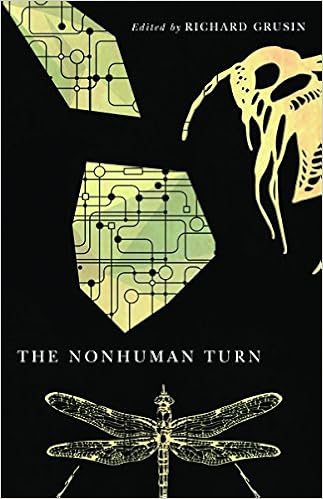
[wishlist] Richard Grusin (Editor), The Nonhuman Turn (2015)


Edited by Richard Grusin of the Center for 21st Century Studies, this is the first book to name and characterize—and therefore consolidate—a wide array of current critical, theoretical, and philosophical approaches to the humanities and social sciences under the concept of the nonhuman turn. Each of these approaches is engaged in decentering the human in favor of a concern for the nonhuman, understood by contributors in a variety of ways—in terms of animals, affectivity, bodies, materiality, technologies, and organic and geophysical systems.

The nonhuman turn in twenty-first-century studies can be traced to multiple intellectual and theoretical developments from the last decades of the twentieth century: actor-network theory, affect theory, animal studies, assemblage theory, cognitive sciences, new materialism, new media theory, speculative realism, and systems theory. Such varied analytical and theoretical formations obviously diverge and disagree in many of their assumptions, objects, and methodologies. However, they all take up aspects of the nonhuman as critical to the future of twenty-first-century studies in the arts, humanities, and social sciences.

Unlike the posthuman turn, the nonhuman turn does not make a claim about teleology or progress in which we begin with the human and see a transformation from the human to the posthuman. Rather, the nonhuman turn insists (paraphrasing Bruno Latour) that “we have never been human,” that the human has always coevolved, coexisted, or collaborated with the nonhuman—and that the human is identified precisely by this indistinction from the nonhuman.

Contributors: Jane Bennett, Johns Hopkins U; Ian Bogost, Georgia Institute of Technology; Wendy Hui Kyong Chun, Brown U; Mark B. N. Hansen, Duke U; Erin Manning, Concordia U, Montreal; Brian Massumi, U of Montreal; Timothy Morton, Rice U; Steven Shaviro, Wayne State U; Rebekah Sheldon, Indiana U.

좋은 정리

http://m.news.naver.com/read.nhn?mode=LSD&sid1=001&oid=293&aid=0000017754

갓해천

http://news.khan.co.kr/kh_news/khan_art_view.html?artid=201607112050015&code=990100#csidx35d8d90949bd0638dd71288c5962d98

오늘의 인용

"창고에 와서 일을 하다 보면, 저자들도 한번씩 와서 알바를 해도 괜찮겠다는 생각을 한다.

무슨 골탕을 먹이려는 건 아니다.

책에 대한 관념이 어느 정도 중화되는 경험을 할 수 있어서이다.

이 막대한 물질성을 통해서 말이다."

황규관 선생 페북에서 스리슬쩍

[스크랩] [스페셜] 페미니즘 계보도 혹은 지형도

[스페셜] 페미니즘 계보도 혹은 지형도 - 여성주의 운동은 어떻게 시작되었고 지금은 어떤 화두를 중심으로 이루어지는가

페미니즘과 관련된 개념과 담론을 한눈에 살핀다는 건 어불성설이다. 지금 이 순간에도 페미니즘은 여성이 직면한 현실과 길항하며 진화하는 생물과도 같다. 여성이라는 이유로 혹은 여성이기에 겪어야 했던 억압과 차별, 여성의 감정과 시선을 설명하는 하나의 언어이자 운동이기도 하다. 바로 그렇기 때문에 페미니즘 운동에서 중요한 목소리를 낸 이론가들과 그들에게 영향을 주고받은 저자들을 살피는 작업은 여전히 유효하다. 압축적이나마 페미니즘의 흐름을 살피고 현 시점에서 중요한 페미니즘의 이슈들을 통해 그 지형도를 그려봤다.

기억해야 할 4인의 페미니즘 영화이론가

1970년대 시작된 페미니스트 영화이론을 대표하는 네명의 여성학자를 주목하자. 기념비적 논문 <시각적 쾌락과 내러티브 영화>로 유명한 로라 멀비는 여성 이미지에 대한 남성 관객의 관음증, 페티시즘적 반응을, <월드 스펙테이터>를 쓴 카자 실버먼은 시각뿐 아니라 여성 음성이 영화에서 쓰이는 방식을 연구한다. 1987년에 에세이 <젠더 테크놀로지>를 쓴 테레사 드 로레티스는 여성 관객의 문제에 푸코의 섹슈얼리티 이론을 도입하면서 그의 논의에서 누락된 성차의 문제를 제기하는 개념인 ‘젠더의 테크놀로지’를 제안한다. <여성괴물, 억압과 위반 사이>를 쓴 바버라 크리드는 공포영화에서 괴물로서의 여성, 괴물스러운 여성성이 부각되는 영화들을 통해 가부장적 시각을 비판한다. 그들 이후 서구적 응시에 관한 연구를 반박하거나 재작업하며 <원시적 열정>을 쓴 중국계 미국 이론가인 레이 초우도 기억해둘 만한 이름.

1세대 여성주의 (First-wave feminism)

18세기 초부터 19세기를 관통하면서 영국, 캐나다, 네덜란드, 미국을 중심으로 전개된 여성주의 운동. 여성의 교육권과 참정권(Suffragette), 재산권 등의 보장을 주장하며 법적 차원의 양성평등을 외친다.


메리 울스턴크래프트

계몽주의적 전통 위에서 ‘여성도 인간’이라며 인권 개념에 여성도 포함돼야 한다고 주장한다. 이성을 지닌 온전한 인격체인 여성도 평등한 교육과 정치 참여의 기회를 제공받아야 한다는 입장. <여성의 권리 옹호>(1792)에서 성적 쾌락을 즐기는 남성을 비판하는 동시에 여성이 여성성을 부정할 여지를 남기며 결혼에 협력했다는 비판을 받기도 한다. 이른바 ‘페티코트를 입은 하이에나’라는 것. 그럼에도 그녀는 결혼은 했지만 파트너와 따로 살며, 미혼모로 사는 등 자기만의 방식으로 일, 결혼, 육아를 이어간 실천적 이론가로 평가된다. 장 자크 루소의 <에밀>(1762)의 교육론을 비판할 때 <여성의 권리 옹호>가 언급되기도 한다.


샬롯 퍼킨스 길먼

19세기 미국의 페미니스트, 사회주의자, 소설가. 심각한 산후 우울증을 겪은 뒤 자전소설 <노란 벽지>(1892)를 썼다.

“자신의 성(性)을 지켜내기 위해 그녀들은 펜을 들었다.”
시몬 드 보부아르의 말처럼 초창기 페미니스트들은 자전적 소설과 글쓰기를 통해 페미니스트로서의 자아를 발견한다.


버지니아 울프

앞선 이들보다는 뒤 세대이지만 이후 페미니즘 역사에 큰 영감을 준 작가. 장문의 학술 논문이던 <자기만의 방>(1929)은 여성으로서의 자아 성찰이 도드라진다.


시몬 드 보부아르

<제2의 성>(1949)은 역사 속 여성은 정상적인 성을 가진 남성의 반대급부인 비주류의 성으로 정의돼왔다고 말한다.


2세대 여성주의 (Second-wave feminism)

1960년대 서구 세계 전체로 퍼진 페미니즘 운동. 섹슈얼리티, 가족, 재생산권리 등 불평등 담론에 초점을 맞춘다. 베트남전쟁 반대와 워터게이트 사건에 저항하는 흐름 속에서 여성들은 인종차별, 성차별, 가부장제, 억압과 같은 단어들을 발견한다. ‘개인적인 것이 정치적인 것’이라며 사적인 문제로 치부돼온 것들을 공론화한다. 포르노그래피, 성매매, 성폭력, 동성애, 레즈비어니즘에 대한 관점이 발전하며 여성해방운동과 게이해방운동으로 이어진다.


슐라미스 파이어스톤

<성의 변증법>(1970)을 통해 반(反)사랑, 반(反)결혼, 반(反)체계를 말한다. 마르크스-엥겔스의 변증법적 역사 유물론을 페미니즘적으로 해석해 젠더 문제를 하나의 계급적 지배관계로 분석한다. 생물학적 결정론의 시각에서 여성의 재생산 능력이 여성 억압의 원인이라고 본다(피임약은 1960년대 후반에서야 서구에서 대중화되기 시작, 1950년대까지 전세계 여성은 평균 5명의 자녀를 출산했다. <페미니즘의 개념들> 349쪽 참고).


케이트 밀릿

<성 정치학>(1969)은 사회 곳곳에 침투한 가부장제라는 권력 구조를 역사와 문학 비평을 통해 날카롭게 분석한다. 젠더 문제는 남성과 여성의 지배-피지배 권력 관계로 환원된다.


베티 프리댄

<여성의 신비>(1963)는 20세기 미국 페미니즘의 두 번째 흐름을 열었다는 평을 받는다. 미국 중산층 가정을 두고 ‘편안한 포로수용소’라고 고발한다. 남성이 여성에 대해, 여성이 자신에 대해 갖는 상(像) 모두에 드리워진 신비화된 여성성을 파헤친다.

자본주의와 가부장제의 관계성 유무 둘을 구분하는 학자로는 줄리엣 미첼, 하이디 하트만이, 둘이 함께 하나의 체제를 구성한다고 보는 쪽에는 아이리스 영과 질라 아이젠슈타인이 있다.


미셸 푸코

페미니즘의 이론적 발전에 큰 영향을 준 이론가. 1970년대 후반 <성의 역사> 연작을 통해 섹슈얼리티가 권리 박탈과 금지를 통해서 규제만 되는 게 아니라 법규와 격려를 통해 (재)생산되기도 한다고 주장한다. ‘무엇을 하지 말라’는 금지만이 아니라 ‘무엇을 할 수 있고 또 해야만 한다’는 강제와 독려가 오히려 더 큰 문제일 수 있다는 지적이다. 근대적 주체는 권력망에서 나온다고도 주장한다.


3세대 페미니즘

1990년대부터 현재까지의 일련의 흐름. 성차보다는 여성 내부의 차이에 주목하며 다양성, 정체성의 문제와 여성 내 분열을 해결하는 데 힘을 결집한다. 이른바 포스트모더니즘의 흐름 속에서 후기 구조주의 철학, 정체성 정치 등이 논의된다.


주디스 버틀러

억압적인 것은 ‘남자’가 아니라 페미니즘의 ‘이분법적’ 사고 방식이라고 주장한다. 남자와 여자라는 구조화된 시각이 고정화된 성별 역할, 신체적 행동을 유도하게끔 해 성차별을 강화한다는 것이다. 성별에 따른 사회적, 심리적 역할이 있다는 기존 페미니스트들의 생각에 동의한다. 하지만 페미니스트들이 불변하는 생물학적 특징으로 여긴 성(性) 또한 사회적으로 구조화된다는 주장을 내놓는다.


케이티 로이프 & 수잔 브라운밀러

케이티 로이프는 <다음날 아침>(1993)에서 캠퍼스 내 성폭력에 반대하며 가두 행진을 벌이는 ‘밤길 되찾기 시위’ 같은 연례행사가 날조된 드라마이자 거짓 강간 문화를 상징한다고 비판한다. 수잔 브라운밀러는 <의지에 반하여: 남성, 여성, 그리고 강간>(1975)에서 강간을 충동적인 욕망의 범죄가 아니고 적대적이고 폭력적인 타락 행위라며 강간과 데이트 성폭력에 대한 논의를 이끈다.


벨 훅스

인종, 피부색, 지역에 따라 여성 내의 차이를 발견해갈 때 흑인 여성에 대한 논의가 중요한 이슈가 된다. <나는 여자가 아닙니까: 흑인 여성과 페미니즘> 등을 통해 백인우월주의적 자본주의 가부장제에서 여성의 평등은 없다고 꼬집는다. 앨리스 워커의 <더 컬러 퍼플>(2007)을 비롯해 영화배우 출신인 엔젤라 데이비스, 레베카 워커 등이 있다.


키워드로 본 페미니즘 지형


❶ 여성 혐오 & 여성 살해


페미사이드(femicide), 남자들에 의해 자행되는 여자들에 대한 혐오 살인. 다이애나 러셀은 1976년 이 용어를 공식화한다. 이후 그녀는 “여성들에 대한 증오, 경멸, 쾌락 또는 숭배관에 따른 동기를 가진 남성들에 의한 성차별적 테러리즘의 가장 극단적 형태”로, 재클린 캠벨과 캐롤 러니언은 “동기나 가해자의 신분에 상관없이 여성의 살해”를 모두 여성 살해에 포함시킨다.

마사 누스바움

정치철학자인 그녀는 <혐오와 수치심: 인간다움을 파괴하는 감정들>(2006)에서 인지심리학적 접근으로 반유대주의, 인종차별주의, 성차별주의, 호모포비아 등 차별에 있어 혐오가 어떤 식으로 작동하는지를 보여준다.


❷ 섹슈얼리티 & 퀴어

섹슈얼리티는 성역할, 성적 지향, 성적 감수성 등 성적 정체성을 정의하고 재생산하는 모든 영역을 아우르는 말. 퀴어는 이성애 중심의 사회에서 주변화된 성적 주체들을 통틀어 칭함. 테레사 드 로레티스는 “퀴어는 또 하나의 담론적 지평, 성적인 것을 사고하는 또 하나의 방식”이라 말했다.

미셸 푸코

섹슈얼리티가 자연적 조건이라기보다는 담론적 산물이라는 주장. 레즈비언, 게이 연구가 충분히 새로운 모양을 갖도록 자극한다.


❸ 몸의 정치

폭력과 억압, 관습, 제도화된 의학을 통해 여성의 성과 재생산 과정을 통제하는 것에 문제제기. 도러시 디너스타인, 수전 그리핀은 몸으로부터의 소외가 여성 억압에 일조한다고 함. 여성주의자들은 월경, 임신과 양육권 담론이 때론 몸의 통증의 근원이 되기도 한다는 사실을 간과했다고 말함. 수전 웬델의 <거부당한 몸: 장애와 질병에 대한 여성주의 철학>, 미셸 푸코의 <미셸 푸코, 섹슈얼리티의 정치와 페미니즘>도 읽어볼 만하다.

이택광 논란

지젝과 연루된 이택광 논란은 한 두번 접하는 것이 아니다. 어떤 사람이 이런 생각이 행동과 연관되어 있는 것이냐는 식의 질문을 던질 때 이택광은 항상 그것을 저지하거나 냉소한다. 대중은 그런 이택광의 행동에 공분하고. 이택광은 확실히 행동보다 비판적 생각이 먼저라고 생각한다. 그에게 문제시되는 건 이데올로기다. 그에게 지젝은 생각거리, 지적 혁명이 일어나는 장소다. 그렇기 때문에 생각을 멈추게 하는 행위가 불편한 것이다. 나는 거기에 일부 동의할 수 있기 때문에 이택광이 비상식적(?)으로 행동하는 것을 일부 이해할 수 있다. 오히려 욕을 먹으면서까지도 신념을 지키려고 애쓰는 것 같아 보이기도 한다. 그럼에도... 이건 아니다.

리트머스에서 이사란 존재

오늘 페북을 잠깐 활성화시켜서 구경하다가 김태균 작가가 백팀장 페북에 "리트머스에 양혜규 작가 초청해야겠어요"라고 주절거리는 걸 봤다. 피꺼솟.

리트머스가 법인체인 건 이제 알겠고. 쉽게 없앨 수 있는 것도 아닌 건 알겠다. 여기에 이사란 직책이 형식적으로 필요하고 그렇게 있지도 알겠고. 그럼에도 이 공간 운영에 어떤 일도 하지 않고 할 수도 없는 사람이 운영에 관해 뭐라뭐라 한다는 건 정말 이상하다. 저런 잘못된 주인의식은 어디서 나오는 걸까.

만약 리트머스 이름으로 더욱 큰 일을 한다면, 어떻게 되는 걸까? 숨어있던 '이사'들이 모두 튀어나와 자기 권리를 행사하는 건 아닌지.

사실 정말 짜증났던 건 양혜규라는 이름 그 자체였지만.

진중권 메모

아 사이다!!!!! 90퍼센트 통쾌. 사실 미술비평이라기보다 논리학 선생같은 느낌이랄까. 그런 건 있음. 여튼 모든 포퓰리스트들은 진중권의 적.

다만 진중권의 분류적 의미로서의 예술이 이미 정확하게 규정되어 있는 건 아니라는 점. 다만 발화자가 평가와 분류를 이중으로 구사한다고 비판은 가능.

법에 예술이 무엇이다라는 정의가 있을리도 없고. 검찰 측에서 분류적으로 접근 할 수 있는 건, 누구에게 피해를 입힌 것이 사실이냐 아니냐 거기에 따라서 사기냐 아니냐를 분류할 수 있다. 법적 차원의 옳고 그름을 미적 차원에서 말하기는 힘듦. 진중권 (ㅇ)

진중권 애매하게 이야기하고 있는 지점.

1. 뒤샹과 워홀 이후 예술 개념이 규정됐다고 보는 근거 자체가 미술사일 텐데, 그것이 분류 근거로서 절대적인 것이냐. 애매. 하지만 미술사를 일종의 '역사'로 받아들이고 현대미술을 우리 미술의 '역사'로 받아들인다면 역사적 사실에 근거해서 어느정도 설득력을 얻을 수 있다고 봄. 하지만 그것 또한 애매.

2. 예술 자체가 분류할 수 없기 때문에 예술이다/아니다를 분류하고 싶은 사람을 비판할 수 있음 (o)

3. 예술 자체가 다원적인 것이다는 주장은 다원예술을 규정하고 있으므로 (x)

2016년 7월 11일 월요일

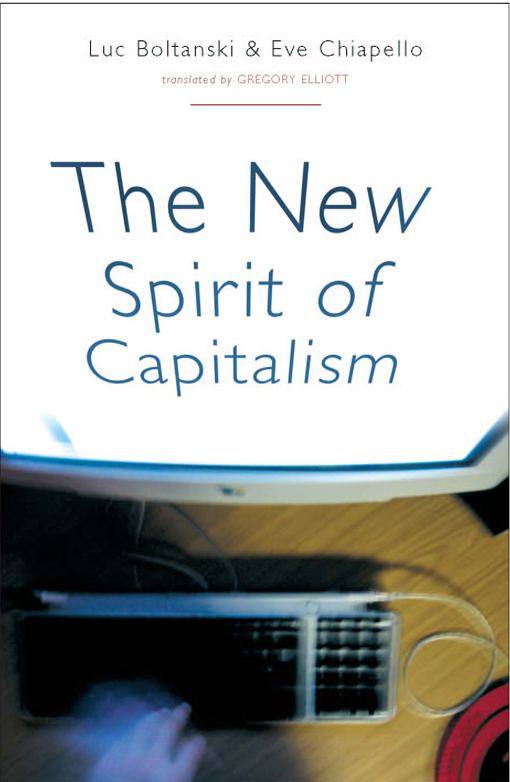
[위시리스트] Luc Boltanski and Eve Chiapello, The New Spirit of Capitalism (2007)

https://www.versobooks.com/books/259-the-new-spirit-of-capitalism

9781844671656-frontcover-max_221


The New Spirit of Capitalism

A major new work examining network-based organizations and post-Fordist work structures.
Why is the critique of capitalism so ineffective today? In this major work, the sociologists Eve Chiapello and Luc Boltanski suggest that we should be addressing the crisis of anticapitalist critique by exploring its very roots. 

Via an unprecedented analysis of management texts which influenced the thinking of employers and contributed to reorganization of companies over the last decades, the authors trace the contours of a new spirit of capitalism. From the middle of the 1970s onwards, capitalism abandoned the hierarchical Fordist work structure and developed a new network-based form of organization which was founded on employee initiative and relative work autonomy, but at the cost of material and psychological security. 

This new spirit of capitalism triumphed thanks to a remarkable recuperation of the “artistic critique”—that which, after May 1968, attacked the alienation of everyday life by capitalism and bureaucracy. At the same time, the “social critique” was disarmed by the appearance of neocapitalism and remained fixated on the old schemas of hierarchical production. 

This book, remarkable for its scope and ambition, seeks to lay the basis for a revival of these two complementary critiques.

빈우혁? 피터 도이그 짭이 이렇게.

Hal Foster, Exhibitionists (2015)

- Ways of Curating by Hans Ulrich Obrist Penguin, 192 pp, £9.99, March 2015, ISBN 978 0 241 95096 8
- Curationism: How Curating Took Over the Art World – And Everything Else by David Balzer Pluto, 140 pp, £8.99, April 2015, ISBN 978 0 7453 3597 1


The Surrealists liked to proclaim that everyone who dreams is a poet, and Joseph Beuys that everyone who creates is an artist. So much for the utopian days of aesthetic egalitarianism; maybe the best we can say today is that everyone who compiles is a curator. We curate our favourite photographs, songs and restaurants, or use numerous websites and applications to do it for us. Although ‘curating’ promises a new kind of agency, it might deliver little more than a heightened level of administration, as cultural interests are packaged as ‘curated’ consumption. Often enough this packaging is algorithmically automatic: ‘If you like that, you’ll love this.’ Such ‘curating’ suits a postindustrial economy in which our main task, when it is not to serve, is to consume. And when we curate songs or restaurants, or Spotify or Eater do it for us, what do we actually produce? As ‘cognitive labourers’, we manipulate information, which is to say we curate the given, and this compiling often presumes a good amount of compliance. Who among us considers what is signed over when we click ‘I agree’?

This problem is not taken up by the Swiss art curator Hans Ulrich Obrist in his brief account of his formation as an Ausstellungsmacher, and it is no more than touched on by the Canadian art critic David Balzer in his breezy book about ‘how curating took over the art world – and everything else’. But both do point out how far we have come from the original avatars of the term (whose root is cura or ‘care’): the curatores, the civil servants who oversaw public works like the aqueducts in ancient Rome, and thecuratus, the priest who attended to private matters like the soul in the medieval period. They also include, as any potted history of curating must, the arrangers of RenaissanceWunderkammern (the cabinets of curiosities whose objects pertain more to natural history than to art history), the keepers of royal collections of art, the décorateurs of paintings in the salons of the 18th century, and the organisers of such museums as the Louvre after the royal collections were nationalised.

Several of the scholars who founded the modern discipline of art history, such as Alois Riegl, were also important curators (Riegl oversaw the textile collections at the Museum of Applied Arts in Vienna in the late 19th century). Closer to our time, however, a divide opened up between the university and the museum, as some academics were attracted to theory while most curators stuck to connoisseurship. This divide was less marked between academics and curators who worked on premodern periods – the Renaissance expert Michael Baxandall, for example, was greatly respected in both worlds – and some curators of 20th-century art are much admired in the academy (the Museum of Modern Art in New York has had a string of such figures, from William Rubin to John Elderfield to Leah Dickerman). Today the more telling split is between modern and contemporary fields (the latter has no exact birthdate – 1970, 1980, 1989), but this is a schism less between the university and the museum than between scholarly curators and flashy exhibition-makers. This split first developed as the modern art museum was penetrated by the culture industry, and then deepened as the contemporary art world expanded into the global business of biennials and fairs; with the first phenomenon came a demand for on-site entertainment, with the second a need for far-flung attractions. Little wonder that spectacle came to rule the day.

Obrist evinces this split between curator and impresario in his account of his own lineage. He picks out Henry Cole, the entrepreneur of the Great Exhibition in 1851, who erected the iron and glass Crystal Palace in Hyde Park not far from where Obrist currently works in the Serpentine Galleries. He also cites Sergei Diaghilev, the animator of the Ballets Russes, as a pioneer of the ‘modern form of Gesamtkunstwerk’. Of course leaders of early 20th-century movements like Futurism and Dada were showmen too: Marinetti published his ‘Founding Manifesto of Futurism’ on the front page of Le Figaro in 1909, and Tristan Tzara was a relentless promoter of Dada events. The avant-garde, mass media and scandal have often gone together; the difference today is that the proportions are way out of whack.

At the same time Obrist pays homage to serious curators who were not primarily provocateurs: the German Alexander Dorner, who directed the Hanover Museum from 1925 until he was ousted by the Nazis in 1937, commissioned avant-garde artists to design radical exhibition schemes; the Dutch Willem Sandberg, a member of the Resistance, who as curator and director of the Stedelijk Museum in Amsterdam between 1945 and 1962, championed experimental artists as they groped for a way forward after the Second World War; and the American Walter Hopps, who, with his staging of a landmark Duchamp retrospective in Pasadena in 1963, sparked a rethinking of Dada for an entire generation of Pop, Minimalist and conceptual artists in the United States. Obrist reserves his highest praise, though, for his immediate godfathers: the Swede Pontus Hultén, who, as head of the Moderna Museet in Stockholm, organised the first Warhol retrospective in 1968 and went on to be the founding director of both the Centre Pompidou in Paris and the Museum of Contemporary Art in Los Angeles; the Swiss Harald Szeemann, who advanced Post-Minimalist art involving unexpected materials and methods with his legendary exhibition Live in Your Head: When Attitudes Become Form in Berne in 1969; and the German Kasper König, who pioneered the display of site-specific sculpture with an exhibition in Münster in 1977 (he has restaged this Skulptur Projekte every decade since). That Obrist singles out these three is telling, for they can be seen as transitional figures between the old school of modernist curators like Dorner and Sandberg and the new breed of spectacular exhibition-makers today. Szeemann actually preferred the label Ausstellungsmacher, and Obrist calls König a ‘cultural impresario’ as if there were nothing problematic about the job description.

In our time this line of exhibition-makers has split in two. Curators like Okwui Enwezor, who heads the Venice Biennale this year, and Lynne Cooke, senior curator at the National Gallery in Washington, continue to produce ambitious theme shows à la Szeemann and König. But a problem had already emerged in the 1990s: as some artists began to act as curators, rooting in storage rooms and exposing objects that museums would prefer not to exhibit, some curators began to behave like artists, juxtaposing works as if they were just so much aesthetic material to manipulate. Obrist shies away from this tendency: ‘I don’t believe in the creativity of the curator,’ he writes. Yet whatever his critics say, Obrist doesn’t fit the category of flashy exhibition-makers either. The standout figure here is Klaus Biesenbach, chief curator at large at MoMA, who is more likely to appear in the celebrity pages than in art magazines (he has arranged mostly vacuous retrospectives for crossover stars like Marina Abramović and Björk). Life-styling of this sort is depressing: such ‘curationism’ has little relation to scholarship, let alone to criticism (both are decidedly uncool), and little of the sense of service to patrimony or public that still motivates some curators in Europe. At the beginning of the practice known as ‘institutional critique’, Robert Smithson insisted that the artist must understand the apparatus he or she is ‘threaded through’ in order to challenge, if not to change, its operations. Today many artists are only too happy to be so threaded, and many curators only too eager to do the threading. Szeemann and König came up against a rigid system that they worked to free up; the new breed of exhibition-makers appears content not only to inhabit that loosened system, but to be the ‘agents’ (as they like to say) of its exploitation by the fashion, music and entertainment industries.

Obrist is earnest in his commitment to his artists; he describes his first encounters with the Swiss duo Peter Fischli and David Weiss, the French Christian Boltanski and the German Gerhard Richter as conversion experiences. And though he looks all of his 47 years, his energy has not flagged: a recent profile in the New Yorker counted roughly two thousand trips, 2400 hours of taped conversations and two hundred catalogues over the last twenty years (he has assistants, but still). Obrist arranged his first exhibition in a tiny kitchen while he was a student at St Gallen, and apparently he hasn’t cooked, or slept, much ever since; most of his life is spent on the road, seeking out collaborators and dreaming up exhibitions as if there were no tomorrow. Indeed the present – the sense of presence – is foremost in his sights. Obrist reports an epiphanic conversation with Matthew Barney in January 2000 about ‘a new hunger among artists for live experience’, and like his curatorial colleagues in ‘relational aesthetics’, Nicolas Bourriaud, head of the École des Beaux-Arts in Paris, and Daniel Birnbaum, director of the Moderna Museet, he is devoted to ‘time-based’ art, especially performances and installations staged by artists of his generation like Rirkrit Tiravanija, Pierre Huyghe, Philippe Parreno and Dominique Gonzalez-Foerster – apparently more formal work is too slow.​1

For Obrist curating involves not only extensive collaboration but also ‘infinite conversation’. In 2006, with another ‘mentor’, Rem Koolhaas, he launched the Serpentine Marathon, a ‘24-hour polyphonic knowledge festival where all kinds of disciplines meet’, and he has adapted this strategy of accumulation to other forms too, with compilations of ‘manifestos for the 21st century’, instructions for artworks to be made by others, as well as hundreds of interviews. This is not for everyone (for Sartre hell is other people; for me other people talking non-stop is a worse place), and certainly not enough attention is given to the quality of the discourse, or of the ‘community’ effected. For Obrist the doing is all.

These books by Obrist and Balzer, along with other volumes by Terry Smith and Paul O’Neill, help us to pick out three preconditions for the recent shift in exhibition-making, which should be grasped dialectically.​2 The first was the conceptual art of the 1960s, especially as it prompted the ‘post-studio’ and ‘post-medium’ practices of the 1970s and 1980s. As Obrist says, conceptualism challenged ‘the idea of art as the production of material objects’, permitting almost anything – a statement, a snapshot, the slightest gesture – to qualify. On the one hand, this opened up the field of art, as is evident in the interdisciplinary terms that Obrist sees as essential to contemporary production – the Gesamtkunstwerk, the library, the archive, the collection, the laboratory. On the other hand, this interdisciplinarity has often come at the cost of disciplinary rigour, and the expansion of art has also meant an extension of its administration – in the sense of its market management as well as its academic study. Moreover, what art is a better match for an economy of ‘cognitive labour’ than one given over to immaterial knowledge? Obrist champions the ‘creative self’, which is the very term used by Luc Boltanski in his analysis of the ‘new spirit of capitalism’, and the Obristian motto ‘Don’t Stop’ perfectly suits the work regime that Jonathan Crary called, in a recent polemic, ‘24/7’.​3

Second, the shift in exhibition-making with Szeemann and König has had ambiguous consequences, which might be captured by way of a statement made by Jean-François Lyotard – ‘the exhibition is a postmodern dramaturgy’ – on the occasion of his 1985 show at the Centre Pompidou, Les Immatériaux, which Obrist regards as another landmark. (The press release suggests the flavour of the event: ‘A whirlwind of stopped paths where you will draw your own. Sites of biogenetics and visual arts, architecture and astrophysics, of music and food, of physics and clothing, a maze of linguistical machines, of habitats and photography, industry and law. Miles of invisible wiring. And our questions: reality, material, equipment, matrix of meaning, and who is the author?’) On the one hand, this ‘postmodern dramaturgy’ suggests a way in which the theme show, opened up to philosophers like Lyotard, can stage key questions of the time, as Les Immatériaux did in relation to his theses about the end of ‘master narratives’ and the rise of new knowledge protocols. On the other hand, such staging can easily slip from inquiry into showmanship. There is a further twist with Obrist, who in the end is more networker than impresario, for if we are to believe Luc Boltanski, networking is more conducive to the new spirit of capitalism than spectacle is. In a sense Obrist is a human aggregator, almost a social-media-in-person or a hive-mind of one. This is implicit not only in his hectic meeting and greeting but also in his semi-anonymous prose, which calls to mind the language of a collective Wiki-brain. For a Bildungsroman of a kind, Ways of Curating doesn’t display much personality; Obrist is rather like Warhol in this regard (certainly they share a compulsion to record), a cipher who is at once iconic and spectral.​4

Third, 1989 is a hinge moment for this generation of curators. Born in 1968, Obrist pins his hopes on the transformative years when he came of age, and in many ways he is a product of the cultural interchange facilitated by ‘the new Europe’. Inspired by the Martinican writer Edouard Glissant, Obrist is also taken by notions of artistic ‘creolisation’ and ‘archipelic thought’. Yet what Glissant and Obrist call a newmondialité that allows for cultural alterity others might see as a globalisation that homogenises such differences. It is both, of course, and that is what must be understood. At times Obrist is almost Panglossian about our neoliberal age; I suppose it would be hard to move as fast as he does if he weren’t powered by positive thinking.

And what about all those shows, conversations and books, with the prospect of many more to come? Obrist is exemplary but not singular in this respect, and it prompts one to wonder for what present, let alone what future, such archives are compiled. What viewer-reader, now or later, will be able to process it all? (Could it be that all this curating needs a … curator?) Obrist presents his project, especially the conversation marathons, as a ‘protest against forgetting’ (a phrase borrowed from Eric Hobsbawm, one of his many interviewees), but his avant-gardism also commits him to ceaseless innovation. One of his guiding principles is that an exhibition ‘should always invent a new rule of the game’, or at least ‘a new display feature’. And Obrist thinks in terms not of specific histories of forms, genres, mediums or even exhibitions, but of one big ‘history of the format’; the last lines in his credo concern how ‘digital curating’ will develop ‘new formats’ for ‘our future’. All this flying around, inventing rules and reformatting might indeed be a protest against forgetting; it could also be a fast track to oblivion.

Nicolas Bourriaud, the Exform (2016)

https://www.amazon.com/Exform-Futures-Nicolas-Bourriaud/dp/1784783803

8월 출간!?

Author of the influential Relational Aesthetics examines the dynamics of ideology 

Leading theorist and art curator Nicolas Bourriaud tackles the excluded, the disposable and the nature of waste by looking to the future of art—the exform.

He argues that the great theoretical battles to come will be fought in the realms of ideology, psychoanalysis and art. A “realist” theory and practice must begin by uncovering the mechanisms that create the distinctions between the productive and unproductive, product and waste, and the included and excluded.

To do this we must go back to the towering theorist of ideology Louis Althusser and examine how ideology conditions political discourse in ways that normalize cultural, racial and economic practices of exclusion.

글에 대한 저작권

한국의 미술가는 평론가가 글을 써주면 글을 자신이 소유한다고 생각하는 것 같다. 그래서 자신의 도록이나 기타 등등에 막 실어도 된다고 생각한다.

Levi Bryant, the Democracy of Objects

http://openhumanitiespress.org/books/download/Bryant_2011_Democracy-of-Objects.pdf

Levi Bryant (ed,) Speculartive Turn (2011)

http://www.re-press.org/book-files/OA_Version_Speculative_Turn_9780980668346.pdf

exform

결국 과학용어인 인류세(Anthropocene)의 개념을 철학용어인 사변적 실재론(speculative realism)으로 자연스럽게 연결시키면서 논의를 확장한 것으로 보인다. 사변적 실재론(speculative realism)은 철학적 동향으로, 인간과 비인간 사이의 완전한 평등을 말한다. 그리스철학에서부터 데카르트의 ‘코기토 아고숨’까지 인간의 사고가 모든 것을 좌우한다(인간중심주의)는 서양철학의 오랜 개념이다. 즉 인간이 경험하거나 생각할 수 있는 것만이 존재할 수 있었다. 사변적 실재론은 객체를 넘어서는 인간의 사고 우위를 비판한다. 사변적 실재론의 대표적 학자인 그레이엄 하만의 ‘객체지향 존재론(object oriented philosophy)’이나 레비 브리언트의 《The Democracy of Objects》에서 이들은 형이상학적 자율성을 부여해 의식의 굴레로부터 자유로운 객체를 시도한다. 다른 요소들 간에 계급이 없는 존재론(flat ontology)을 주장하는 것이다. 정치적 의미로서 사변적 실재론을 해석하자면, 이는 pre-marxist의 상황이다. 내 생각에 그 배경은 자본주의의 논리적 결말로도 분석될 수 있다. 자본주의에서 모든 것은 객체가 된다. 우리는 모두 물질/객체(object)고 거기에는 어떤 인식도 없고 각 물질/객체 간의 변형이 일어나지 않는다. 그런데 예술은 인간과 비인간 사이의 뒤섞임의 장을 연다. 결국 사변적 실재론이 제안하는 존재론은 Exform의 새로운 예시가 되고 이는 현대미술에 주요한 영향을 끼친다. 모든 객체가 같이 놓일 때(flat ontology) 오직 예술만이 예외적인 상황을 즐길 수 있기에 객체는 예술 속에서 변주될 수 있다. 그런 의미에서 타이베이 비엔날레2014는 관계의 미학의 이론적 내용과 사변적 실재론 사이의 대화라고 볼 수 있다. http://monthlyart.com/hot-people-%ED%83%80%EC%9D%B4%ED%8E%98%EC%9D%B4-%EB%B9%84%EC%97%94%EB%82%A0%EB%A0%88-2014-%EC%B4%9D%EA%B0%90%EB%8F%85-%EB%8B%88%EC%BD%9C%EB%9D%BC-%EB%B6%80%EB%A6%AC%EC%9A%94/